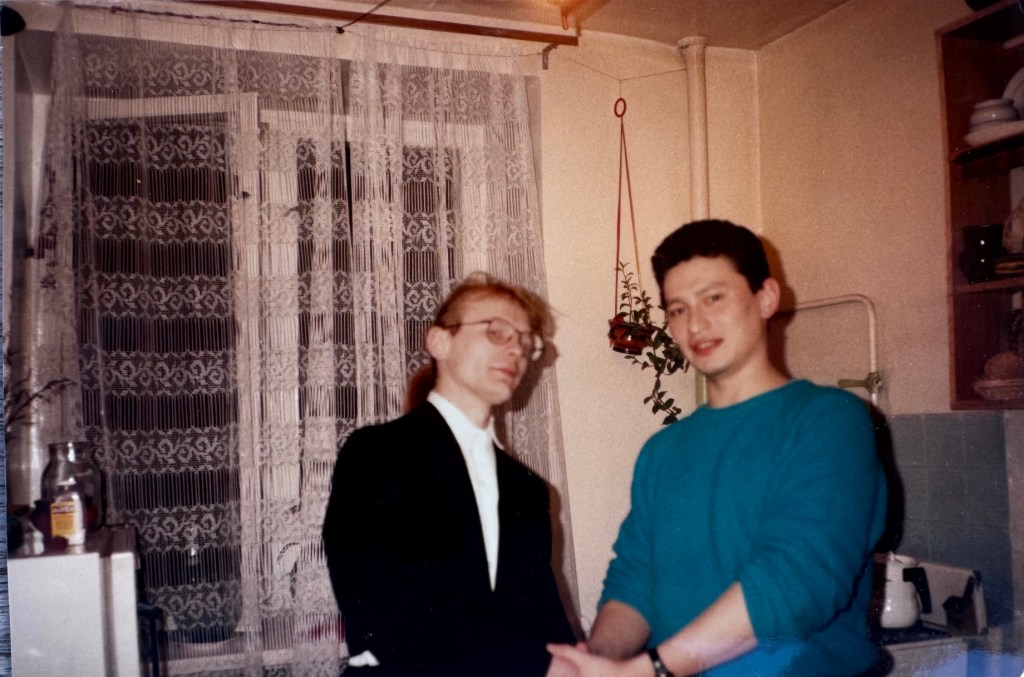
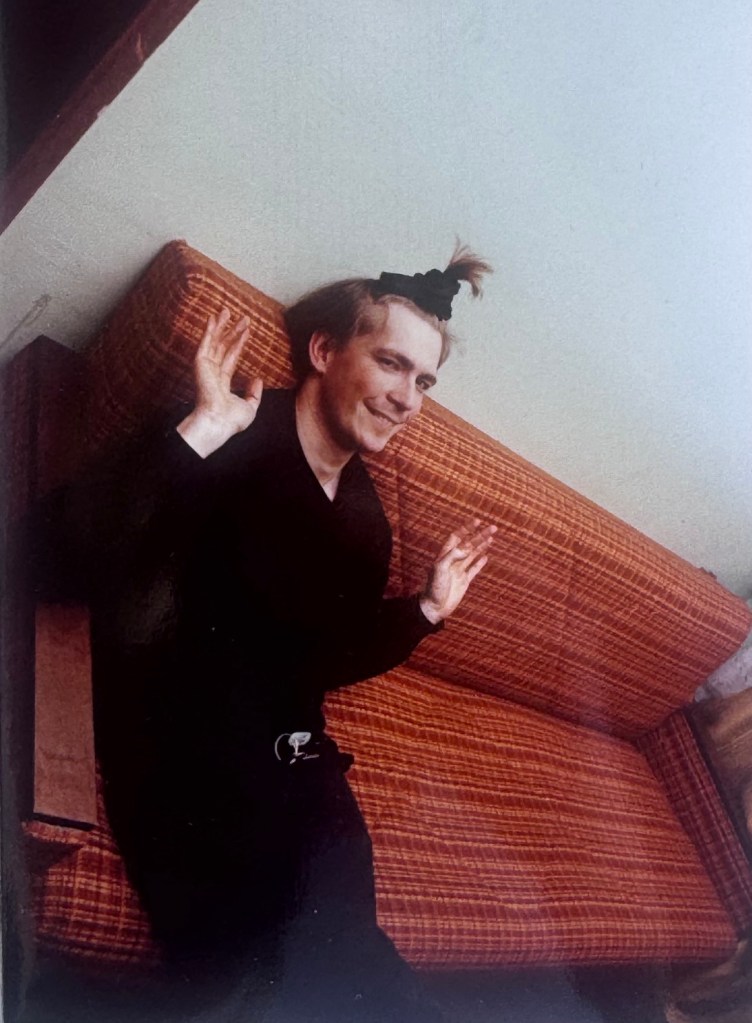
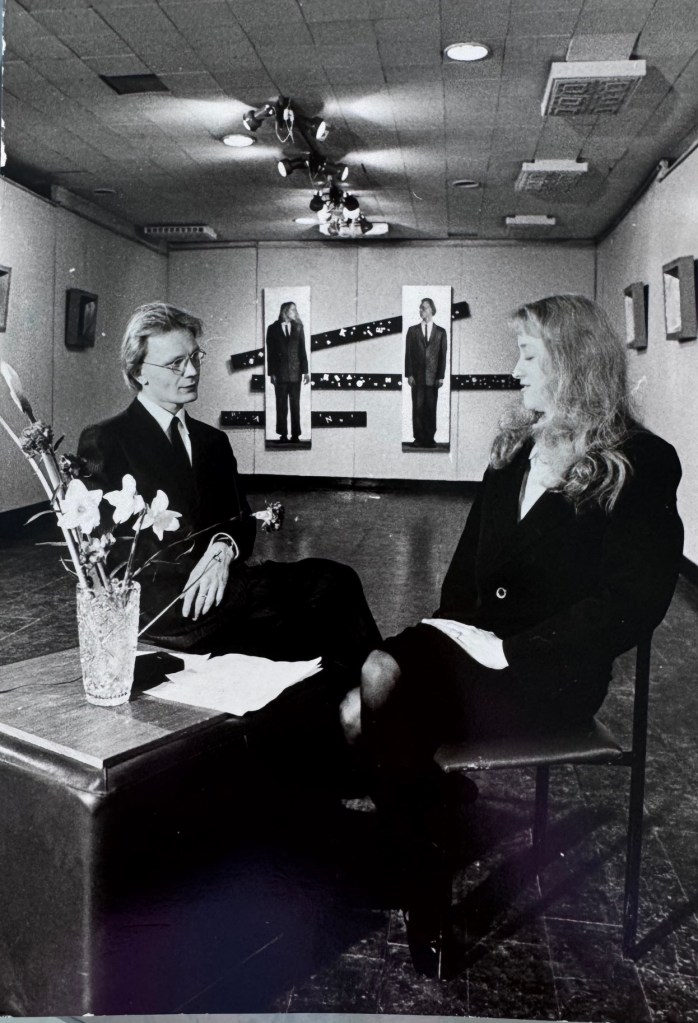
• Apologies once again for ruining the chronology of this tale. I have been remiss in omitting some events that had a positive impact. The first one brings to mind a Scottish friend who stayed with us in Hampstead – Angus MacDonald, who hailed from a prosperous family. In exchange I was invited to stay with his family and go horse riding, which was good until my nag decided to canter and then gallop. Luckily I managed to cling on. Clearly I was not made out to be a jockey.

    In addition, I was afforded at the age of 15 the opportunity to work for the first time at his father’s company for a few days for the princely amount of 60 pounds, which seemed a lot back then. It was around Christmas and on the last day, 24 December, I was invited to a party where I imbibed a lot of alcohol, sleeping it off on the train. Not content with this excess, in the evening I went with school friends to a local pub where they kindly bought me five pints, in particular, a particularly strong version.  Apart from the excessive alcohol in the system, the only problem was a promise I had made to my sister to go to Midnight Mass with her. A promise I naturally didn’t keep.

    Another story post A levels also springs to mind. In summer 1981 Etienne’s mother asked my parents if her now fifteen-year old son could stay at our place for a week to improve his English. I was told to talk him solely in English. I promised to do my best. However, Etienne played dumb and feigned ignorance. So we conversed in French. Then I introduced him to my friends Chris and John. Unfortunately, they too ended up having to try to speak French. However, one afternoon we were walking towards Ealing Broadway and saw 30 girls on Ealing Green. The perfect opportunity.

    We decided to approach them and suggested that they go to the cinema with us. It transpired that half of them were French. It was a bit surreal for the two of us going to the cashier accompanied by 30 girls. I ended up sitting next to Catherine. The film was Chariots of Fire. However, I don’t recall any of the movie. Catherine and I stayed in touch as friends for many years to come. Etienne’s English didn’t improve and I apologised to his mother in person with some choice pastries from a Parisian boulangerie a few years later.

    In January 1982 I had a lot of time on my hands before potential admission to university in September. So while waiting for responses from other universities, I worked for the temp agency Manpower in a variety of short-term menial positions, primarily washing pots and pans at Heathrow Airport, but only until June. 

    I had applied the previous year to a camp site in the south of France where we had gone camping for a week as a family instead of Italy. I received in March an offer of a three-month contract and the opportunity to make some cash. Camping de La Dune in Arcachon, Bordeaux, was located right in front of Europe’s tallest sand dune, still over 106 metres above sea level in 2018. It was breathtaking and a different world. In addition, I worked in the evenings as an usher at an outdoor cinema. By the end of my time there I felt more self-confident, driven by the fact that I had been forced to get out of my comfort zone – from introvert to extrovert. I highly recommend anyone suffering from shyness to take the plunge – you have nothing to lose!

    It looked at the time as if France would dominate my future. I loved and still love the language, culture and general laid-back attitude to life. I also have to this day two good French friends and a number of French people among my acquaintances. However, as time will tell, appearances can be deceptive.

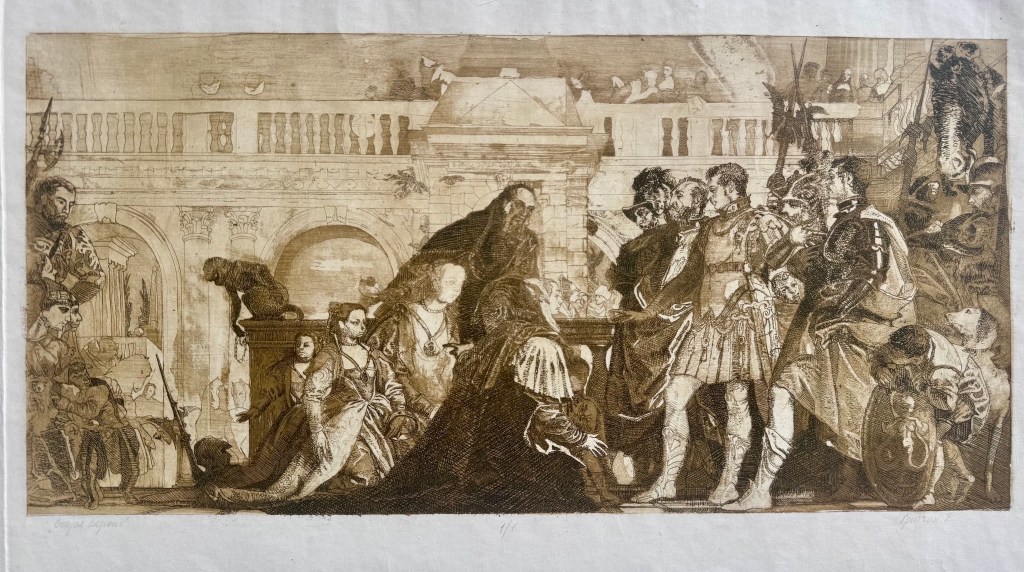
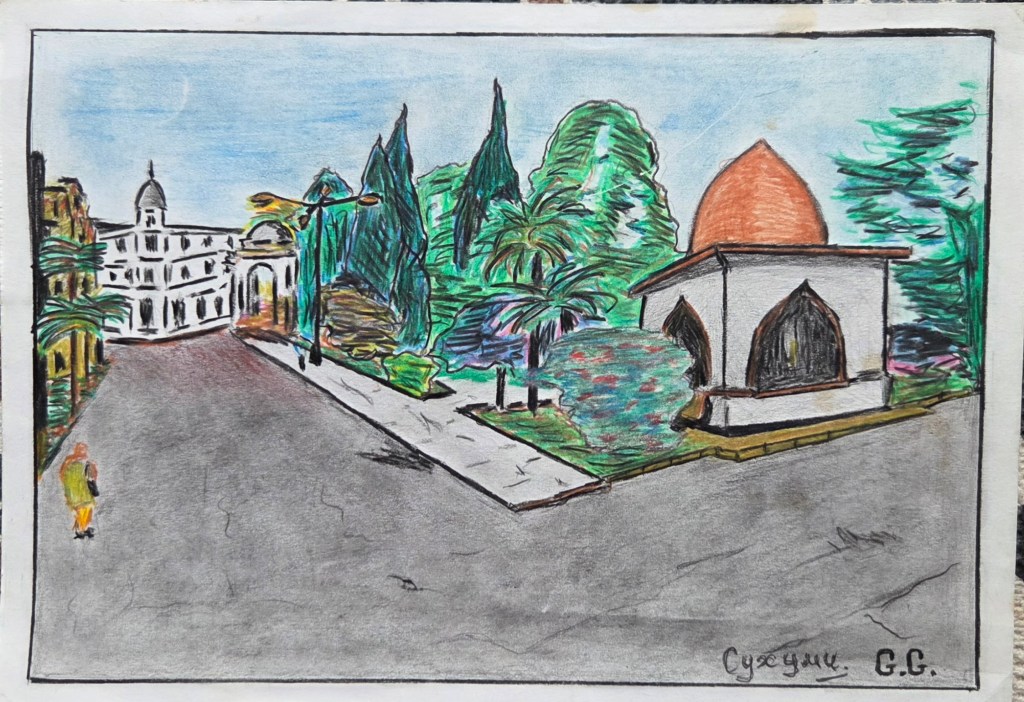
    Painting by Kazakh artist Manas Kisamedinov

    Leave a comment

  • Once again apologies for readers and subscribers. Here I continue on what is a key issue for my profession. I also mention again the offer for investors in Kazakhstan and art fans.

    The risks posed by AI today for professional translators, agencies and clients mirror similar issues raised by previous disruptive technologies: machine translation and translation memory software. I will consider here the evolution of the industry in one country, the challenges that it created and the opportunities going forward for everyone ready to forsake short-term profit for a sustainable, long-term business.

    Back in the early 2000s in Russia translation software providers, such as Trados, for example, sought to persuade companies to acquire their software by offering free training to the translators that they employed. Naturally, the sale was predicated on two differing strategies depending on the audience.

    The providers promised the companies more consistency, greater accuracy, and a subsequent reduction in translation costs, as it would be possible, as it was euphemistically put,  to “optimise” the number of translators employed, supplemented where necessary by assistants. Thanks to the in-house translation memory, subsequent bilingual deliverables would take less time and require less experienced staff.

    At the same time, the providers sought to convince translators that the software would free them from having repetitive translations, standardise their translations, and improve consistency, thereby enabling them to take more time on their work thanks to the software aid.

    In reality, texts still differed significantly, but the translators found that they were expected to translate far more than in the past, as it was assumed by management that the translation memory made their work easier. 

    However, if you are able to translate rapidly, (on the order of 5,000 – 10,000 words a day), the use of translation software inevitably slows you down due to the need to laboriously enter the text into the program. Later on, the software providers targeted translation agencies, citing consistency, but above all efficiency savings at the translator’s expense. I myself opted not to choose the software option and would then be required by agencies that operated such systems to agree to lower pay for repetitive text (down to zero) and a reduction of the actual paid word count by over 50% in the case of so-called “fuzzy” text, even where there were material differences between instances of “repeat text”, which required careful consideration. Shortly afterwards I stopped working for them.

    It struck me that there was no tangible long-term benefit for the translator. A number of the agencies spearheading the use of such software closed down, as the final product was far from perfect, due in part no doubt to the quality of the work of the translators who were persuaded to agree to extremely low rates. 

    And then along came machine translation, soon superseded by the allegedly superior AI versions. The translator is reduced to the role of a glorified editor of machines spurting out gibberish which in a number of cases has to be “corrected”, in other words re-translated by a translator paid for editing, which is generally half the rate for translation.However, the problems of relying on software have been building up in industry over the past two decades. I will provide here a couple of real-life examples of where it can all go wrong. A couple of colleagues used at one point Trados software as demanded by an advisory firm, both while employed in-house and subsequently as freelancers. Initially, they would be asked to translate audit reports on listed companies from Russian into English using the software. After a couple of years, the reports were no longer assigned to the translators, as they were handled in-house by the respective industry departments, primarily by non-native speakers, in particular audit assistants newly hired employees whose English was far from perfect and who were usually under significant time pressure. On a couple of occasions, I was contacted by a concerned audit partner who requested a translation review of the current version of audit reports on two clients in Russian and English.

    I did a painstaking check that took in each case as long as if I had translated the texts myself from scratch. In both instances the two allegedly identical Russian and English versions differed by 20 to 30 per cent. Here the issue was resolved positively, as a conscientious partner had had the good sense to contact a professional translator. 

    However, if such checks aren’t requested, a number of risks can arise. In the case of an audit and advisory firm, this concerns firstly reputation risk and fees. The client expects professional work, notably that deliverables will be accurate and consistent, and chooses a provider that is respected by industry competitors, shareholders and potential investors and stock markets. Any shoddy work is likely to lead the client to look elsewhere, notify others of the experience, including the media, and also demand a refund. Concerns about translation quality may trigger worries about the underlying audit work.

    However, the problem doesn’t stop there. Let us assume that a client is seeking investors or plans to raise capital. Conflicting versions of financial statements and audit reports will not inspire confidence. Even worse, an investor or lender might at some stage sue the client on the grounds that it was misled by information that differed from one version to another. The client in turn might well take the audit firm to court. 

    Such reputational and litigation risks are directly attributable to the use of translation software where the required oversight is missing. And translation error can prove costly.

    In 2014 I was appointed as an expert in a dispute involving claims of more than USD 100 million. I was asked as the expert translation witness to provide an expert opinion (expert review) on the meaning of certain terms where three different Russian words had been translated as value, even though the common translations were price, value and amount. Some form of software had clearly been used to ensure this consistency! These errors were of particular concern when the text concerned the share price on a particular date rather than the nominal value of the shares. As a result of the expert review, the court proceedings were cancelled at the last minute.. I had effectively saved the client USD 100 million.

    So it can actually pay in the long run to turn to professional translators rather than relying on software or machine translation. Other risks related to use of the latter are also now emerging. As in AI, machines must be trained on an initial corpus, which is obtained from an unknown source by a law firm or agency. There is no clarity as to the actual source, and downloading a company’s data or translator’s data in the initial data used by the machine is potentially unlawful. Litigation could also arise due to the use of language which is indicative of set phrases or branding terminology used by specific companies.

    However, the key issue today is one of liability. Translators take out limited liability insurance, which as a rule covers them for translation, and not editing. So what happens if there are errors after a post-machine translation edit? And how is the liability assigned if a number of translators were used in a legal contract/case or valuation assignment (a vendor due diligence, for example)? The deadlines for such work are often tight, and different texts are distributed between a pool of translators. 

    If the translator cannot be held liable, then does this mean that the agency is to blame? Or what if the errors were due to the initial data used to train the machine? Or is the law firm to blame, if some amendments were stylistic changes made by a lawyer who didn’t like the way something had been translated or edited?  And when were the errors initially made in court cases which can go on for years?

    Clearly, there is a problem in the use of any type of translation software if the professional translator is accorded a nominal role, paid a minimum amount, and expected to work rapidly on assignments where it is virtually impossible to obtain the necessary insurance and where in actual fact the agencies should be responsible for such cover.

    Notwithstanding the risks, there is an opportunity: audit, advisory and law firms and professional agencies will eventually be required to draw on the expertise of professional translators to translate the initial texts and the revised versions and pay them equitably. This should not be a problem, all the more so as in a number of jurisdictions such work is tax-deductible. There is clearly also a need for companies to request translation reviews by professional translators of previous texts, unless they want to scrimp today while potentially facing litigation tomorrow.

    Other opportunities will follow. Let me provide one more example. There are areas where AI and machine translation cannot help: intuitive understanding of the underlying risks in proposals and deliverables. Seminars and conferences on the potential of professional translators to enhance the quality of texts, promptly identify and notify clients of potential pitfalls in the original text, including excessive assurance included in the deliverable that could trigger lawsuits from their counterparties, and proposals on how to avoid such risks, would boost the relationship between industry professionals and their clientele. Better networking between translators in different languages for the delivery of multiple language services to public sectors, where perception and concern over the impact of the text on the final recipient and non-disclosure are prioritised, for example, the National Health Service in the UK for medical reports.

    I have been lucky to have good agencies and have built up a good relationship with them. They know that they can count on me to deliver a professional translation every time and to adhere to non-disclosure undertakings, to point out where there are errors and assist where necessary round the clock.

    Here I turn to potential investors or art lovers. I sponsored an artist from Kazakhstan for many years in the 1990s. His name was Manas Kisamedinov. He became a close friend. Unfortunately he passed away at the pinnacle of his career from a drug overdose, dying far too early, as did his late a father, the famous graphic artist Makum Kisamedinov. In return I would receive works of art. I show here and in the next article paintings that appeared in previous blog entries. More paintings and graphic works will appear in later entries. As time passes, I am now ready to pass them on for the right price naturally.

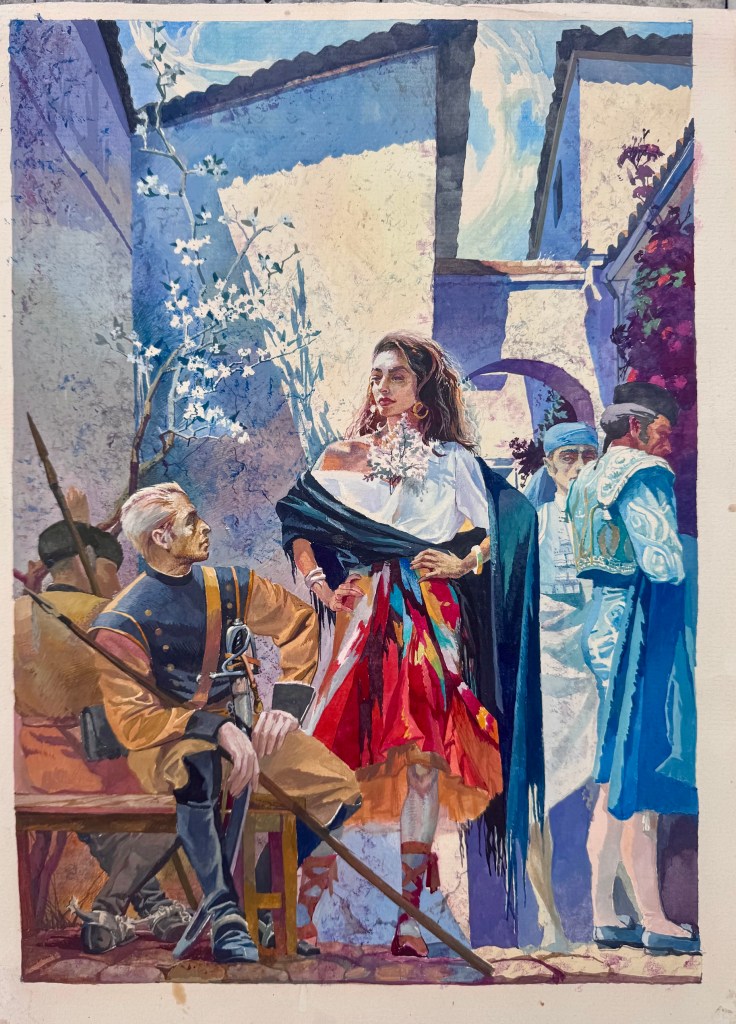
    Painting by Kazakh artist Manas Kisamedinov, 1992.

    Leave a comment

  • Drawing on the Monty Python title, I am taking a break here and in the next blog entry from the autobiography for two reasons. I want to warn readers and subscribers that the next couple of blog entries will deviate significantly, based on my personal experience as a translator. I also have an offer for investors seeking to curry favour in Kazakhstan or to contribute to the country’s cultural heritage, or indeed art lovers keen to brighten their estates with abstract art. In this blog entry I will summarise a couple of issues. In the next entry I will draw on an article (as yet not submitted for publication) where I expand on the topics below. 

    I wanted to draw attention to the risks posed by translation software and more recently by machine translation and its sidekick AI.  The adverse impact of AI applies to many sectors, not only translation.

    A short introduction. For the past 15 years I have been offering a 24-hour translation and editing service to one law firm in Russia together with a friend and fellow translator from Canada. We also offer services to other clients. We understand the fundamental importance of delivering a quality product on time. We also know how communications between the client and provider can improve the deliverable and generate a circle of trust, something that tends to be lost when translations are entrusted to agencies. A discussion of any concerns about a text or request for an updated version as soon as possible proceeds much more swifty if there are no intermediaries. Moreover, discretion is key to the success of such interaction. We sign non-disclosure agreements and adhere to them.

    Recently we have been contacted by law firms and agencies over their concerns about the litigation risks arising from overdependence on AI translations and even AI edits. In response, we have developed an AI translation litigation risk review service where we analyse texts and highlight errors in the AI translations that could result in millions of dollars in losses in case of litigation. The service addresses concerns arising over the varying and haphazard nature of AI translations and the potential damages that may arise if errors in texts are not spotted on time, or indeed on the possibly recovery of losses attributable to the use of faulty AI translations by a contracting party. We also address copyright issues and the breach of non-disclosure undertakings arising from the use of AI systems.

    We also know how over time the quality of a specific deliverable may deteriorate for reasons that are often beyond the control of the auditor or client. For example, there have been instances where we were asked to review the quality of the translation of financial statements of a client and the accompanying notes after a few years when the translation had been updated in-house using translation software. The client was concerned owing to apparent deviations between the Russian and English versions. This might have been due to the involvement of different employees on the assignment. In the instances that we reviewed, the two texts deviated by over 20%. Naturally, such error engenders reputation and litigation risks for the company being audited and the auditor. 

    Indeed, translation error can prove costly. In 2014 I was engaged as a translation expert prior to a court case in the UK where one party was demanding USD 100 million in connection with differences over the value of shares in a company. The issue revolved around the terminology that had been used. Thanks to the expert witness report that I submitted, the trial was cancelled a week before it was scheduled to begin, saving the client the aforementioned amount.

    We can help to prevent the onset of such issues with our professional quality translation service. Here we will compare the Russian and English versions of a report over the past one to three years (this could be an annual report, financial statements, tax or legal due diligence, valuation report, corporate governance and sustainability reviews, etc.), issuing a deliverable that covers the following areas:

    • Whether the two versions are actually identical in form and substance;
    • Whether the terminology is consistent throughout;
    • Whether the translation is correct;
    • What the impact of missing text might be.

    Naturally, as and where necessary we also propose amendments to the translation (if this concerns the English translation).

    We also offer a similar professional quality review of previous deliverables where the text is only available in English (for example, a report on an industry or enterprise prepared for a lender such as the EBRD, checking that there are no material errors of concern). 

    Here I turn to potential investors or art lovers. I sponsored an artist from Kazakhstan for many years in the 1990s. His name was Manas Kisamedinov. He became a close friend. Unfortunately he passed away at the pinnacle of his career from a drug overdose, dying far too early, as did his late a father, the famous graphic artist Makum Kisamedinov. In return I would receive works of art that have been displayed in my home for the past couple of decades. I show here and in the next article paintings that appeared in previous blog entries. More paintings and graphic works will appear in later entries. As time passes, I am now ready to pass them on for the right price naturally.

    Painting by Kazakh artist Manas Kisamedinov, 1992.

  • The number one single Start by the Jam in early September 1980 seemed fairly apt. In the end I decided I didn’t want to go down that route and repeat the year, preferring to finish my time at school as soon as possible with my friends. Naturally, there was one down side to this decision – I had to focus on studying hard for once.


    In the end this wasn’t hard to do, as apart from table football and the surreal experience of a sixth form where you had 15 girls and 150 boys with suppressed libido issues, the year was pretty uneventful, with one minor romance and more heartbreak not worth considering here. At the same time, it was more enjoyable owing to the knowledge that this period of my life would all be over soon. 

    At least some torments would come to an end, from the endless juvenile shouting of “boom boom” – in recollection of my first name and the children’s TV show with the toy fox Basil Brush, to “Basil!” – referencing the hapless hotel owner Basil Fawlty expertly played by John Cleese in the comedy series Fawlty Towers.

    My long hair would also be the source of amusement for some, leading to comparisons to Lady Di, the one member of the royal family I have always respected, as well as to George Michael. In later life, unfortunately, the comparison would be less flattering – Elton John.

    When I did poorly in the mock German A level exam (three pupils – two A students and yours truly close to failing) in May 1981, the teacher urged my parents to make me drop the subject. I was stubborn, refused and in the end got the grade required for admission to university.  At the time I had planned to follow in my father’s footsteps and took entrance exams to go to Peterhouse College, Cambridge. However, I either failed the exams or interview (or both!) – admittedly, I was still a pretty immature seventeen-year old. 

    The one thing I do recall, both on finishing classes, then exams and subsequently entrance admission to Cambridge, was the sense of emptiness and loss, a realisation that I would probably never see again a number of people I had spent years getting to know. 

    It was a sense of isolation and solitude, no doubt attributable in part to uncertainty about the future. We receive no preparation for such a change in our lives and the negative impact can be telling. I know of a suicide that happened shortly after one fellow student completed his studies and wonder if this sentiment of detachment and void might have played a role. It would be good if the authorities or someone in society respected by the youth of today were to look into this issue and offer some solutions.

    Apart from the friendships I made at school, a couple of whom I see to this day, albeit irregularly, I would be hard pressed to claim that I had enjoyed the experience. It is no doubt a rite of passage that can both leave lifelong scars and open up doors to new opportunities. 

    By contrast, I remember every day at university in London with pleasure and cherish the long-term friendships made back then both in the UK and during the time teaching and working in the south of France during the year abroad. I felt very lucky to embark on that journey where learning went hand in hand with something akin to burgeoning maturity.

    Painting by Kazakh artist Manas Kisamedinov

    Leave a comment

  • Although I would soon turn 16, I still found the journey to France daunting – travelling solo for the first time by plane and then getting lost on the train as, laden down with bags, I attempted to make my way by metro and train to the south Parisian suburb Athis-Mons where I would stay. 

    I was very lucky to be housed at the weekends with a lovely divorcee teacher from the school which happened to be located close to her property. She had three kids, including Etienne, two years younger, who was to become a good friend. We bonded on music, films and football. One treat was the Sunday afternoon when her ex would come to visit, bringing tasty profiteroles and other pastries from some posh boulangerie. 

    Meanwhile the actual school seemed massive to me, coming as I did from an upper school consisting of 200 pupils. There must have been almost 2,000 students, all boys, ranging in age from seven to nineteen. And everybody appeared to smoke. So I started as well, albeit only a few cigarettes a day. 

    Naturally, I found it hard to adapt to French lessons, writing in French and penning philosophy papers when my vocabulary was pretty sparse, but I got there in the end. Translating from Ancient Greek and German into French also took a while to get used to. My maths and understanding of chemistry and biology also improved.

    However, there was another challenge that I hadn’t expected. I ended up sharing a room with a French guy Michel (the name has been changed) who would constantly mock me. That was not the worst of it though. One evening every week a friend of his from Guadeloupe would pop in late at night and they would take it in turns to beat me. 

    I kept quiet owing to the threats they made if I were to dare say anything. As you can imagine, the frequent unprovoked attacks overshadowed the whole experience. Totally demoralised after three months , I let Etienne know. After he told his mum, I was transferred to another room with a really friendly kid Xavier. It taught me a lifelong that speaking out about a transgression, however humiliating it might feel at the time, can have a positive outcome.

    This is when I actually started to have fun and appreciating the same tracks that would be blasted out every morning to wake everyone up before breakfast: the greatest hits by 10CC: Rubber BulletsArts for Arts SakeI’m Mandy Fly MeI’m Not in Love and the band’s number one hit from September 1978 Dreadlock Holiday.

    I also wrote the lyrics to a number of songs at the request of a young sports teacher for his band. He was most complimentary about one song I wrote called Geranium Blues about a drug addict.

    I took the end-of-years exams and passed them and was offered the chance to move up to the next class and take the baccalaureate. I must admit that I was tempted, but had other plans. 

    The year ended with a moment of true karma. Michel had a horrific motorbike accident. Luckily he recovered. He sought me out and apologised profusely for what he had done. The accident had led him to reevaluate the past. It was that rare instance of seeing how trauma can have a positive impact on an individual and has left an indelible impression on me to this day.

    Another painting by the Kazakh artist Manas Kisamedinov.

    Leave a comment

  • The year 1979 is always connected in my mind to the only time I had a serious political disagreement with my parents – they had decided to vote for the Conservative Party led by Margaret Thatcher for the first time in their lives. They believed that she truly wanted to change the country for the better following the sanctimonious words she uttered outside Downside Street. They were to regret it as she caused havoc throughout, froze my dad’s salary and started a decade where she decimated society, and conducted a foreign war solely to ensure electoral success, a cheap and amoral political trick that is unfortunately so common these days. Another crime was the handover of council houses to tenants with no strings attached. 

    Don’t get me wrong. I realise that this move opened the door to home ownership to a significant number of people in all parts of the country who would never have been able to buy or change their lives so radically without this move. On that level it was a positive step and simultaneously a master stroke, enabling the tory party to control the economic narrative for decades to come. 

    However, the reform had one major drawback: the indicative short-termism of the policy with no attempt whatsoever to contemplate the housing crisis we see now more than 50 years later.  Now there were far fewer council properties for those unable to buy a property or rent on the private market. Moreover, there was no onus whatsoever on construction companies to allocate a proportion of brand new builds as council housing. The tory party didn’t make any such demand and didn’t stipulate preferential treatment for UK residents going forward. As a result,  there is a shortage of cheap accommodation available today, property prices have soared and nationalism has reared its ugly head, with Brexit one direct consequence.

    Anyway, I felt very lucky to be a year younger than everybody else when I started my A levels at the age of 15 in the autumn term running until late December 1979, with Pink Floyd’s Another Brick in the Wall (Part II), aptly describing the angst kids felt around that time. 

    Study-wise, as well as Ancient Greek which I loved and French, I had opted for German, having completed an O level in business German and obtained a B. At the time I had agreed with my parents to drop back a year on completion of six months of studies in the “Second A” stream at the school in Paris. 

    Under the French Baccalaureate, students are streamlined early, in line with their abilities and/or in accordance with underlying academic drivers. The A stream is focused more on literature, philosophy and foreign languages, B on social sciences, languages and mathematics, and C on science and mathematics. As maths was never my strong point, it had to be A. 

    I was looking forward to a new beginning. However, the first few months of 1980 turned out to be far more harrowing than I had expected. But that is another story.

    Painting by Kazakh artist Manas Kisamedinov (1992)

    Leave a comment

  • First of all, apologies to subscribers and readers for the gap between blog entries. I suppose I could attribute the delay to the holiday season or a packed schedule in early January. The truth is, I penned this text last summer and was loathe at first to open up fully. However, who knows, it may prove helpful to someone out there! If only I had known the great confidence coach Russell Edwards back then! I would definitely turn to him now in such circumstances.

    After the harrowing experience of Chris C and the adverse psychological impact at the time and for years to come, I want to turn to brighter planes. One of the major joys of childhood was the annual foreign holiday at the end of school in late July for a few weeks. 

    My mum and dad would always take the family camping to Europe – it was the cheapest option. Owing to the foreign exchange controls reinforced after the end of World War II and updated by the Labour Government in 1966, remaining in place until their abolition in 1979, a family could not take more than 50 pounds sterling in currency and 15 pounds sterling in cash. While that money went much further than today, naturally, it still implied the need to bring a considerable amount of tinned food for cooking on a gas stove in camp sites. 

    It was a good way to see Europe, with visits to towns primarily in France, Germany and Italy. On one occasion the car broke down and insurance covered a week at a posh hotel resort in Austria. In general though we would travel through France on our way to spend two weeks not far from a beach near Cesenatico on the Adriatic coast of Italy. 

    One of the benefits for the kids was getting to spend time with mum and particularly dad away from his study with us in the fresh air, meeting new people, as well as practising French and basic Italian from playing table tennis and table football.

    On the way back home from Italy in 1978, we stayed at a campsite south of Paris where horses and pigs would come sniffing up to the tents and you would get fresh milk from a family farm down the road. There was also a wooden outdoor building where I spent most the free time playing table tennis and met a stunning blonde called Isabelle Barillon. I was so timid, but felt confident enough playing the game. Then we corresponded for a while. She sent a me a postcard the following February, saying that she loved me. On the verge of turning 15 and finishing my O’ levels early in July that year, my dad suggested I start my A’ levels and then study in France for six months from January 1980 at a boarding school during the week and with a family at weekends. Then I could drop down a year and complete my A levels over two years. Naturally I said yes.

    I went for an interview in Paris and was accepted. Then I went to meet up with Isabelle, spending a wonderful time at the Pompidou Centre and walking around France’s capital, but was too shy to kiss her even though Isabelle brought me back to her room. Naturally she broke it off shortly afterwards. I regret to this day the crippling shyness that I felt based on personal insecurity and a sense of inadequacy and a failure to read the mood. Such a lack of confidence affected other areas of my life, but I learned to cope over time. I didn’t know any confidence coaches back then!

    However, I did see Isabelle again a few years later on my return from a summer job in the south of France when we spent an enjoyable afternoon in a massive local subterranean bar in Paris. But that is another story. 

    However, I don’t regret the six months studying in France, which were admittedly hellish at first. They changed me for good. 

    Leave a comment

  • Watching Elvis Costello and the Attractions at the Hammersmith Odeon in 1977 was no doubt one of the highlights of the period, going to the concert together with John and Chris. As well as the concert, we would hang out at each other’s places during holidays, play tennis where they both always won, or table tennis at my house where I would come out on top, or snooker at John’s abode where he naturally ruled the roost. Another friend of the time Andy Mangion would join us now and then. After studies at Cardiff University, he moved on to build up and run an empire of student properties in the city where he lives with his lovely partner Ruth and their two daughters. 

    Back to school. I gradually recovered from the ignominy of coming bottom of the class or even the entire year as I started studying, albeit less than I should have. Other than languages (Latin and Ancient Greek, French and Business German), I enjoyed English and history, was less fond of maths and utterly hopeless at physics. In terms of sports facilities, other than outdoor football, the appearance of table football at school in the sixth form was a godsend. I was at one point included in the rugby team as a hooker owing to my height or lack thereof at the time for a Saturday match, but managed to limit to that experience to one trip, in part no doubt due to the expletives I unleashed in the scrum.

    While that day was far from enjoyable, my worst experience occurred during a class on religious education when I was seated for some reason next to Chris C. I don’t want to disclose his surname here in case he has changed for the better. We had never been friends and didn’t mix at all. On that occasion he told me that one day when I was happy and married, he would find me, come to my house and shoot me. 

    I was shocked at the time and still shudder to this day, remembering the moment when he looked deep into my eyes and emitted these words coldly, with an expression of utter hatred. Clearly his inexplicable and despicable conduct left an indelible trauma as I still check the front door on occasion more than 35 years later and have done so for decades. I am unable to fathom why anyone in fact would say something like that. Looking back, I can only assume that Chris C. might have been suffering some form of abuse at home or elsewhere, or had done so in the past. I am amazed at the cruelty of kids sometimes. 

    Childhood mockery was irritating back then, but more indicative of the intellectual capacity or puerile state of the individuals concerned, who would blare out at me either “boom, boom”, or “Basil, Basil”. At the time Basil Brush, a show about a fox in a glove puppet with attendant ventriloquist, was popular in the UK. He would make what was apparently a joke and shout “boom, boom” to rub it in. Another series that was actually amusing  – Fawlty Towers about an unpleasant and rude hotel owner called Basil Fawlty played by John Cleese – also aired from 1975-79. He is constantly subject to onslaughts from his wife played by Prunella Scales, searching for him and saying repeatedly, Basil, Basil. Other nicknames would come after six months in Paris, another period of peripeteia. 


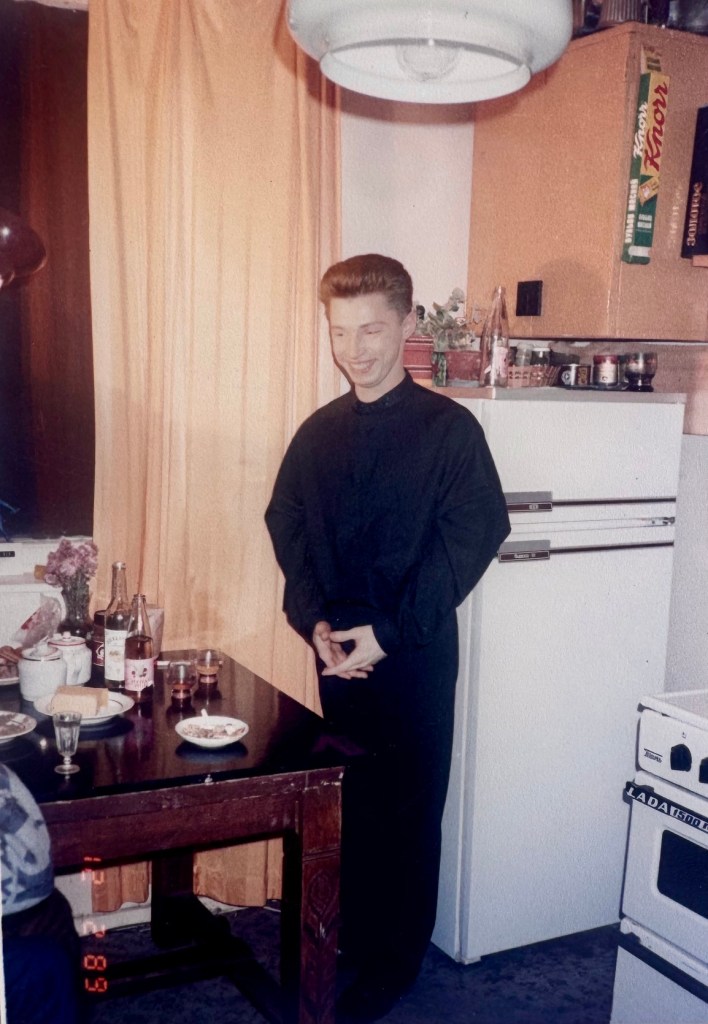
    This photo is from some point in my adolescence. No date, I am afraid.

    Leave a comment

  • Apart from an explosion of musical creativity from punk to ska,  the late 1970s in the UK were marked by significant political and economic upheaval, the Winter of Discontent due to strikes and a sense of insecurity. 

    My dad had been becoming increasingly worried about the left-wing bent of the Labour government of the day and even contemplated a move to New York, working initially there as a painter and decorator, something he was good at, as I mentioned previously. However, it never came to that. 

    No doubt, owing to my father’s influence and the world existing back then in the 1970s and early 1980s, my teenage life revolved around books, especially in the long dark winter evenings, with a constant desire to read attributable to the lack of alternatives, other than studies. I also enjoyed outdoor football, tennis and table tennis, which all came to supplant my interest in chess.

    Not a favourite photo from that time. 

    You have to understand that I grew up at a time in England where there were only three TV channels and the daily programming for children ran from 4 to 6 PM. I remember fondly some cartoons – Scooby-Doo, Where Are You!, Top Cat and the Wombles, and other kid shows such as Grange Hill and The Tomorrow People, whereafter I would be expected to go up to my room and do my homework or stay out of sight and keep myself preoccupied. Initially it was the latter.

    Dinner would be late, timed to coincide with my dad’s return from work at the School of Oriental and African Studies, where he was now a Professor of Indian History.  If he came back by 9 PM, I would get to catch half an hour of the BBC news before being ushered back upstairs.

    As is the case of most people, I never really liked school. The level of indoctrination and inevitable bullying, especially as the new kid on the block aged 13 where everyone was 14. 

    Joining in the final semester of the year and juvenile in more ways than most, I found myself at the bottom of the class. 

    That shame, however, was overshadowed by another event at a morning assembly in late June. Several people were whispering, but for some reason only I was picked out. I was told to come to the front and then publicly caned. It had never happened to me before. I assume that the priest meting out the punishment derived some sadistic pleasure from lashing out. 

    However, I was lucky not to suffer worse. Subsequently, several teachers – all priests – from the school were convicted for sexual abuse of minors, a disturbing and harrowing topic, something that should never happen, especially not at a place preaching to kids about how to live their lives. I am glad they were caught. Luckily neither I, nor any of the pupils I studied with back then were affected directly.

    I recently discussed this and other events from those times with two good schoolfriends of mine Chris Haniff and John O’Brien. They stood out in that they already had a vision of their futures. Chris planned to become a professor of physics and John dreamed of becoming a doctor. 

    They both achieved their goals. Chris teaches at Downing College, Cambridge, and also leverages his knowledge to assist with the planning, design and implementation of astronomical interferometers (telescope arrays – yes, I had to look that up on Wikipedia). Chris also takes on another role that I would prefer: Fellows’ Steward, responsible for social arrangements, including the sourcing and serving of wines.

    Meanwhile, John had to persevere to reach his goal. Back in the 1980s, when only five per cent of the population went to university, it was particularly hard to be admitted to study medicine in London unless your parents were doctors. So John did a degree in pharmacology at King’s College, London and then studied medicine at the University of Aberdeen, where he also met his other half Fiona. They both ended up working as GPs in Portsmouth, before they took on another challenge: retaking their medical exams in order to be able to work as GPs in Vancouver where they now live.

    Sorry, once again I have been sidetracked – I will return to school in the next instalment.

    Leave a comment

  • Harold Wilson resigned in early 1976, to be replaced by James Callaghan who would lead the Labour Party into the 1979 general election. Meanwhile the following year ushered in the Silver Jubilee, technological change, with the emergence of personal computing, in particular Apple (I work on iMacs to this day), as well as the launch of Star Wars: A New Hope, the spread of punk and the Sex Pistols, David Bowie’s continuing rise with Heroes, ABBA, Donna Summer, the Clash and Elvis Costello, the latter to represent the first concert I would attend at Hammersmith Odeon.

    The year 1977 also marked a new start for me, as we moved after the spring term from Hampstead to an estate in Ealing not far from the next school, Saint Benedict’s.

    However, I now realise that I cannot put my early childhood to bed just yet, as a previous dwelling in Windmill Hill, Hampstead, comes to mind. The rooms were small.  I shared a room with Adrian. It was situated not far from an Everyman Cinema which screened old classics, including a couple of Humphrey Bogart films I loved – The African Queen and Casablanca. 

    A fair distance from The Hall (primary school), I would take a bus and be picked up on most occasions by my sister Helen. She looked forward in particular to Mondays as I had cookery class, making omelettes, flapjacks, rice crispy cakes and other tasty morsels, in the hope that I would share the ones I took home with her. Unfortunately, on most occasions I would say no, saving them for my mum, who would naturally give some to Helen behind my back and pictured here.

    She has been a constant in my life, caring for me in particular when I was an infant and growing up and I am forever grateful, returning the favour over the past decade or so. She is a better sister than I could ever imagine. I suppose religion was going to appear at some point: she would also accompany me to the early 8:00 AM mass on Sunday at the local church where I was an altar server. I also played football with the other servers sometimes.

    However, my parents were the real bulwark of the family. Not only that, in their spare time they worked as a team on each property, painting and wallpapering them, with my dad also doing the odd carpentry job at home, in order to be able to trade up to a bigger property in a cheaper location, such as 35 Rudall Crescent, a larger house near Hampstead Heath. Here my dad also created a basement flat with a separate entrance for my late brother John, already in his 20s who had been good at maths and had moved into stockbroking.

    My dad was thrilled to sell the house to a well-known classical guitarist John W. who allegedly assured him that he planned to bring up his family there for a long time. Trusting him, my dad offered a significant discount that he could ill afford on the price. However, the musician would go on to sell the place four months later at a considerable profit. One of my dad’s favourite maxims “Life isn’t Fair” comes to mind.

    However, there was nothing to be done. Now on with the move to Ealing, a new school and good friends there, as well as an unexpected enemy who blighted my future for years to come. But that is another story…

    Leave a comment